What is data-driven fishing?
Using data to enhance fishing success and sustainability at Kubu & Kwena.
Data-driven fishing is about using records and statistics to improve fishing outcomes. By tracking catches, fish sizes, and time spent fishing, we can better understand patterns and improve the overall fishing experience for guests.
Facebook
Twitter
LinkedIn
WhatsApp
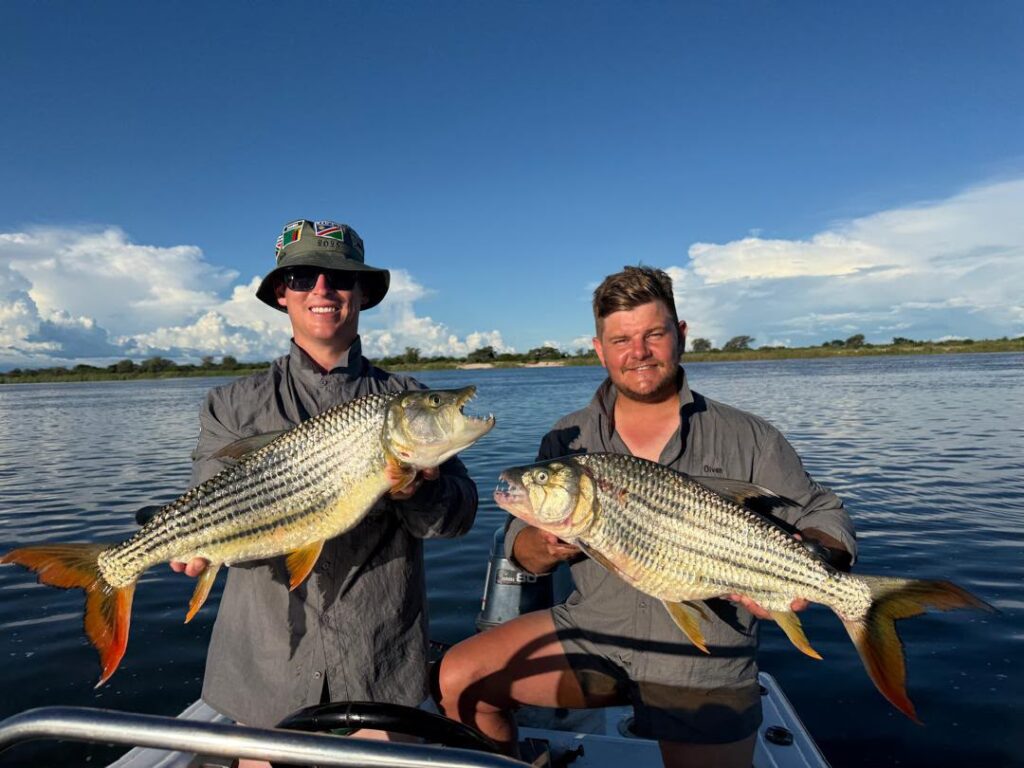
Why Record Fish Landings?
Recording fish landings provides invaluable insights. It allows us to:
- Understand which species are thriving.
- Identify the best fishing times and spots.
- Measure the performance of our guides.
For our guests, this means a more predictable and rewarding fishing experience, where every outing is tailored for success.
What Does This Mean for You as Our Guest?
Our data ensures that your fishing adventure is informed and optimised. Guides use this information to select the best locations and strategies, increasing your chances of success. You’ll have the opportunity to catch specific species like tigerfish, bream, or catfish and compare your results with previous visitors for a more engaging experience.
Nothing is more frustrating for an angler than travelling internationally only to spend days on a boat without results. Our data-driven approach allows you to book your trip with confidence, knowing that our insights maximise your chances of success. We go to great lengths to ensure our data is accurate and verified, as reliable records benefit everyone and help us avoid practices that undermine trust.
As we expand our dataset, we’ll uncover even more trends to manage sustainability and enhance the fishing experience for everyone. This not only benefits our guests but also contributes to preserving the incredible biodiversity of our region for future generations.
Why We Started Recording the Data in 2023
At Kubu & Kwena, we prioritise delivering the best possible fishing experience. In 2023, we began systematically tracking fish landings to provide guests with clear expectations about their potential catches, understand the impact of fishing on local species, and lay the groundwork for long-term improvements.
For example, data from 2023 revealed the concept of the “Tiger Hour” — a metric that tracks the average time (in minutes) between tigerfish catches.
Our system allows us insights like these:
- Currently, the Tiger Hour is at 79 minutes.
- The largest tigerfish caught in the last 30 days weighed 17 lbs.
- The average size for tigerfish landings is 7.4 lbs from 265 tigerfish landings.
- This average is 1.1 lbs heavier than the 2023 average of 6.38 lbs across more than 1,100 tigerfish landings. This upward trend demonstrates that conservation efforts in the region are proving effective.

The real power of logging these landings in a meticulous way is when we start to overlay the various sets of data to create snapshots in time of what worked where, at what temperature and barometric level, etc.
We are confident that these data stories will empower you to catch more fish and create beautiful moments to remember more often.

Our system also integrates with Google Maps to show exactly which areas are hot spots. So we can take guests right to where the action is.
Our Data for the last 30 Days. (21-12-2024 to 19-01-2025)


A Question often asked: “What is the best time of day for cathcing tigerfish?”
This heat map of our last 331 tiger landings will not try to answer the question, but show what happened. Here are the hourly records listed from best to worst.

What Do We Record?
Our dataset includes:
- Species
- Weight in lbs
- Length in mm
- Water temperature
- Method: Fly fishing/Drifting/Spinning/Trawling/Doba-doba
- Barometric pressure
- Depth of catch
- Location Pin
- Guide
- Photo of the catch
Take a look for yourself: Data for the last 30 days
Sign up for our newsletter to receive monthly updates on our latest fishing data. Get insights from the past 30 days and see how the numbers shape your next trip. Updates are sent on the first of every month—don’t miss out!
Book your 2027 trip now.